The government wants Lancashire to re-organise into larger 500,000 people council areas.
True to form most areas of Lancashire have different preferences. This results in 5 options for the 1.6m population. Any option above 3 councils doesn’t meet the governments target of each council covering 500,000 people.
South Ribble has more association with Preston than other areas having largely once been part of Rural Preston but this isn’t the preference of either area.
Preston prefers to join with Lancaster and Ribble Valley which overall would create 4 new councils averaging 400,000 people each.
The only compliant proposals are:
Two councils: populations around 800,000 each.
The 2 would be divided into north and south by the River Ribble.
Three councils: populations averaging 533,000.
1. Chorley, Preston, South Ribble and West Lancashire.
2. Blackpool, Fylde, Lancaster and Wyre.
3. Blackburn with Darwen, Burnley, Hyndburn, Pendle, Ribble Valley and Rossendale.
This is supported by 5 of the 14 councils. The 4 council solution is preferred by 6 councils plus one council that prefers a different four.
Our preference is for a one Mayor of Lancashire solution over 4 councils.
Greater Manchester has 10 authorities for 2.8million which is 280,000 each. With the Mayor sitting above. Could Lancashire have one Mayor sitting over the 4 or a 5 council option solution? Where would the Mayor sit: County Hall, Preston.
The report on the BBC website has useful maps and tables, click here.
A walk from the railway station onto the East Lancs Bridge, down to the riverside and the Tram Road Bridge. Then returning to the centre for a quick visit to the Harris Museum.
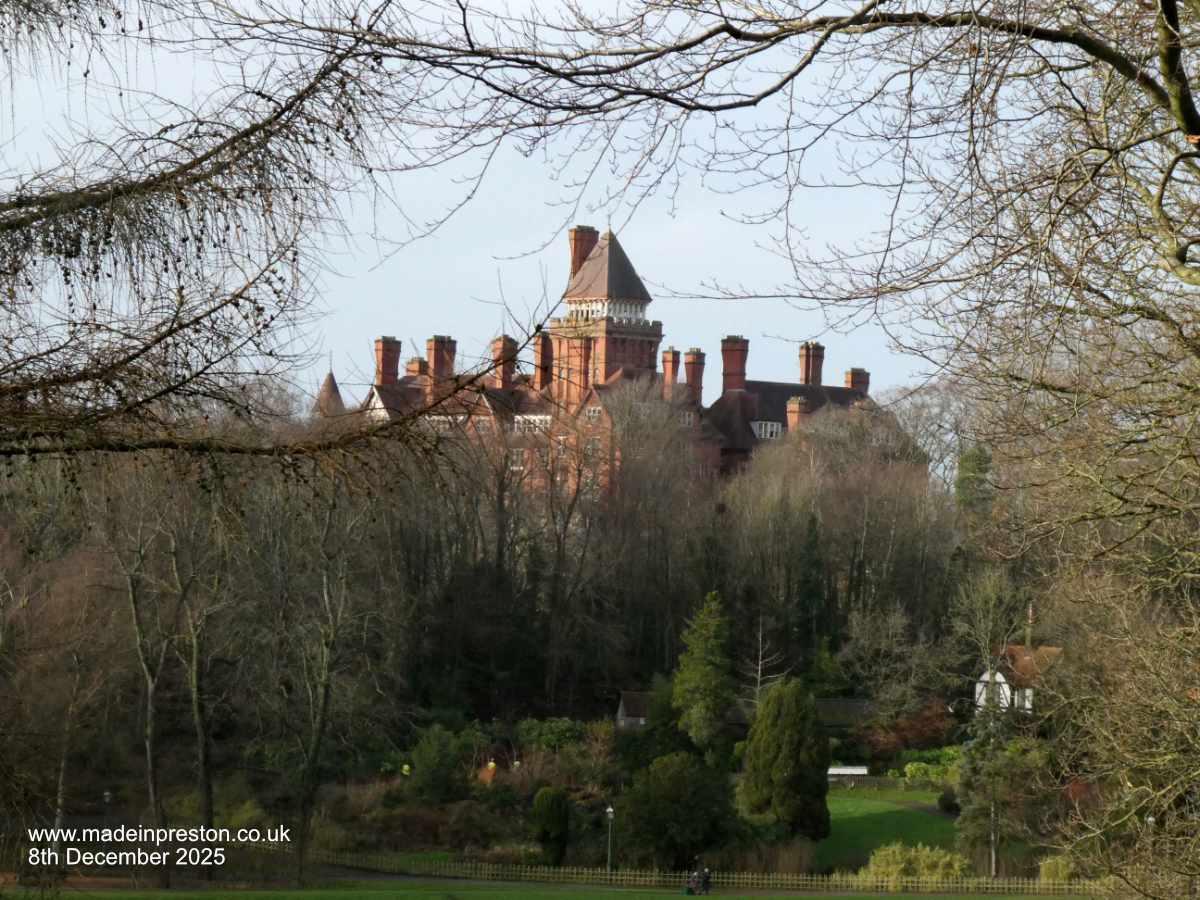
The old Park Hotel. A fine building giving character to the entry to Preston. Now looking depressingly derelict when viewed up close but still great in profile.
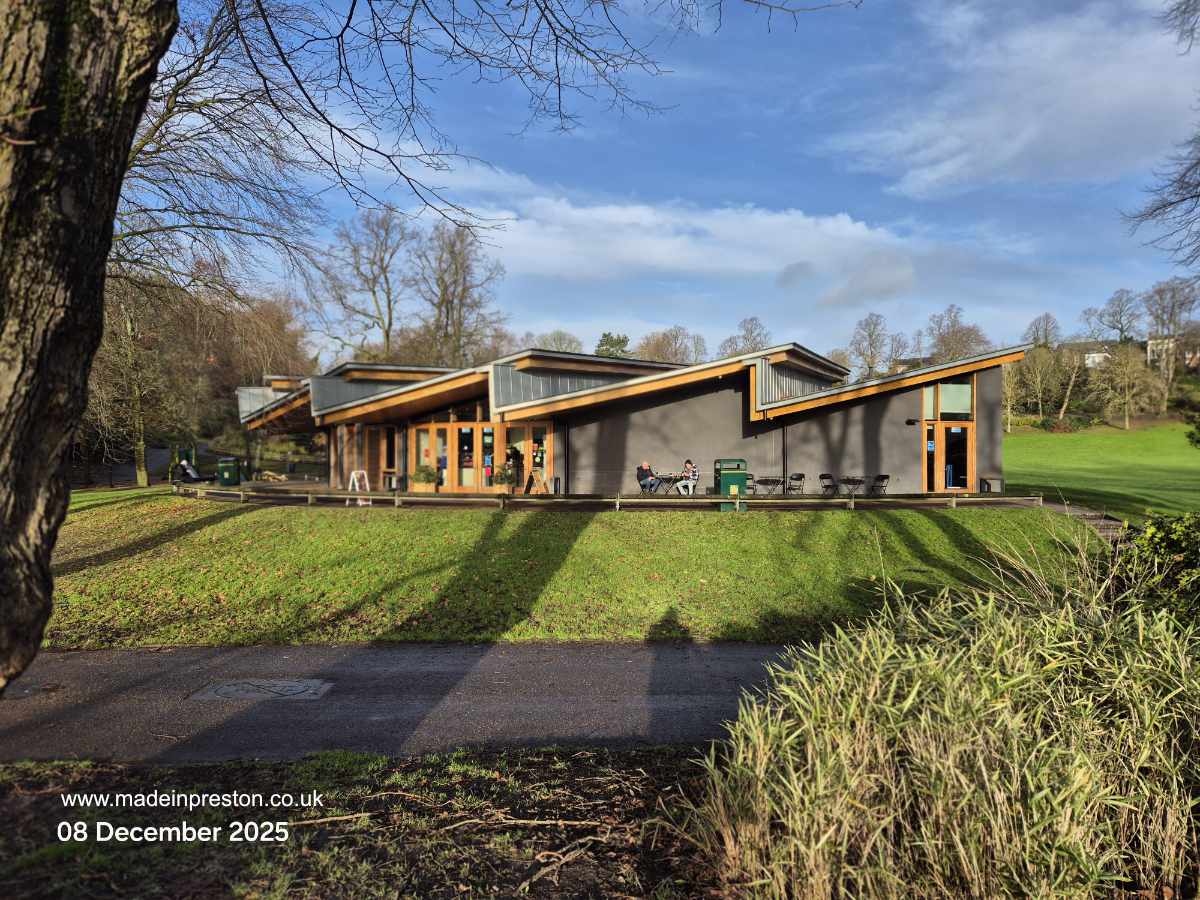
Avenham Park Pavilion Cafe. A novel design. Has it a Japanese touch or a touch of the Scandinavian.
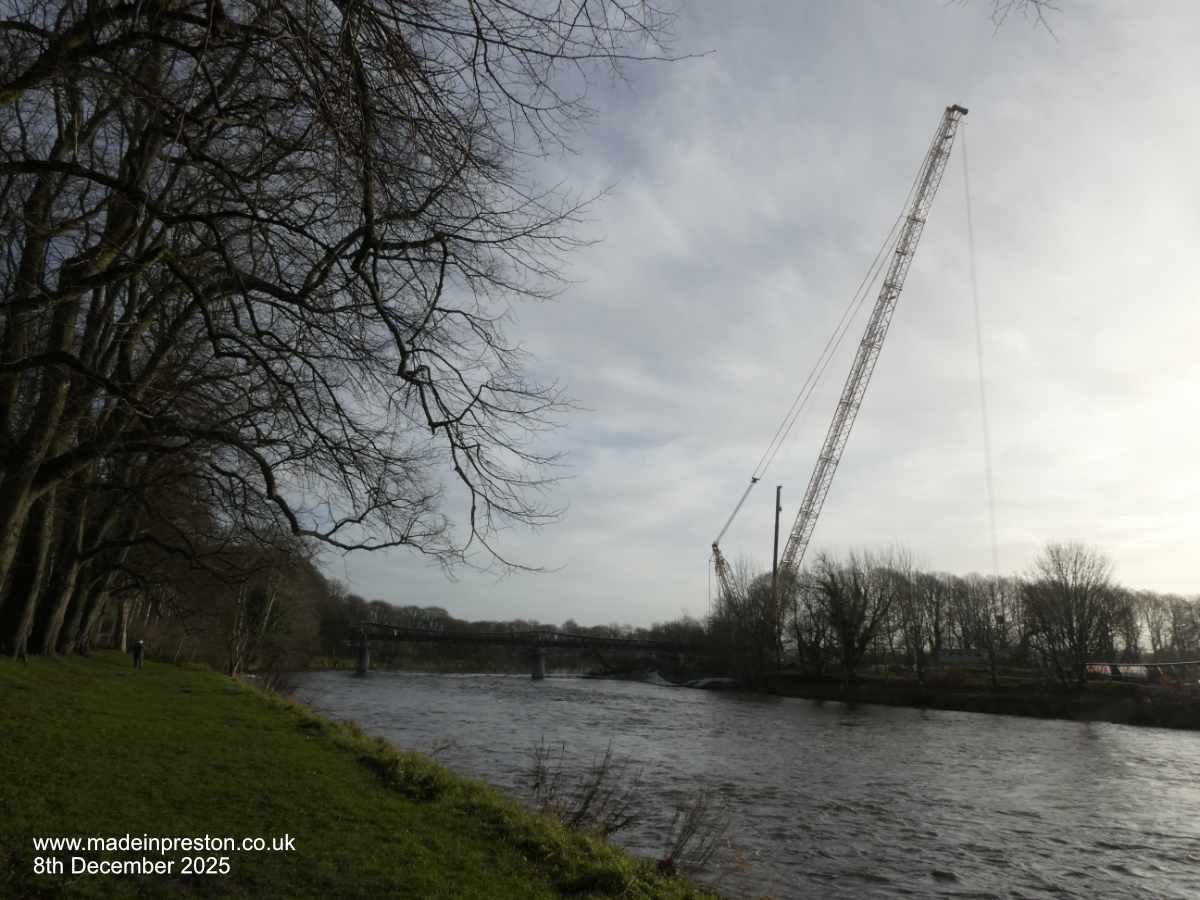
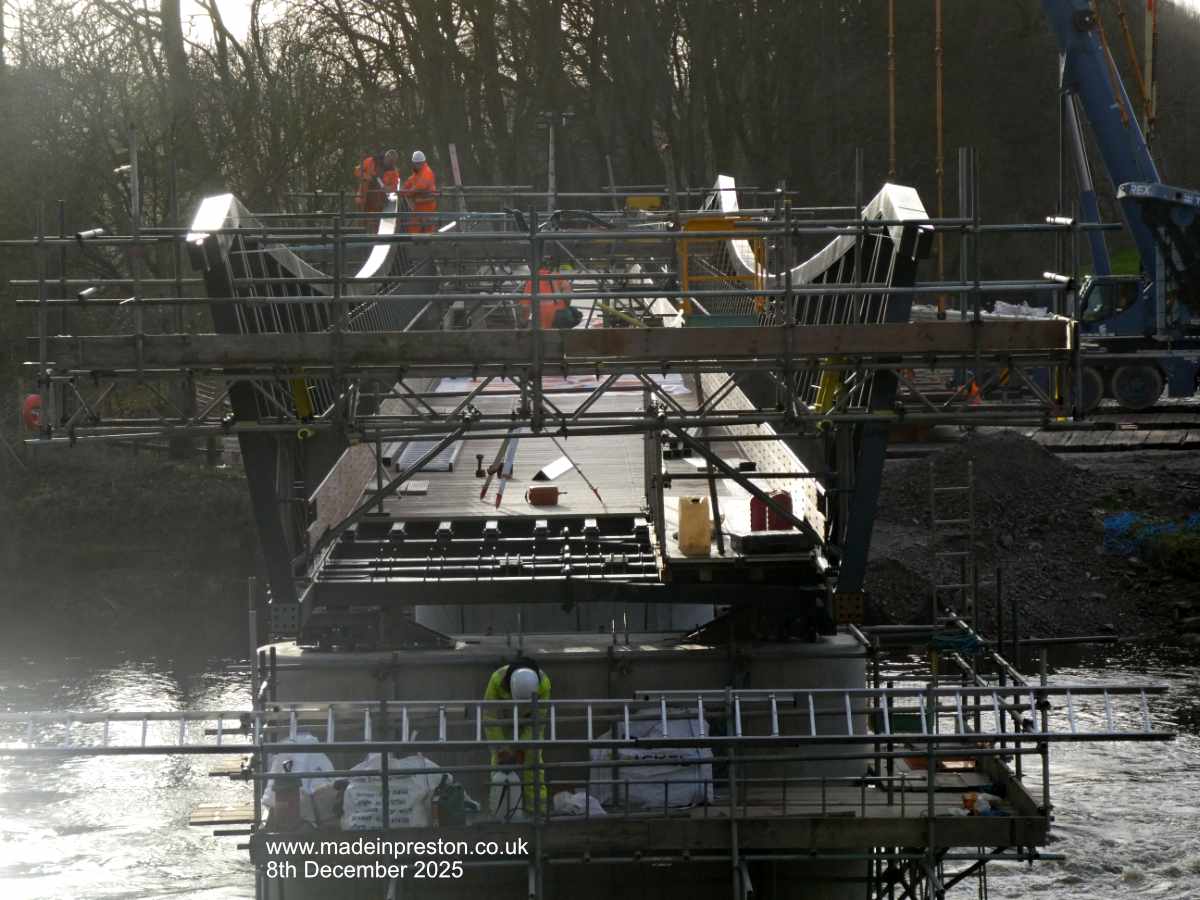
The huge crane that lifts the Tram Road Bridge spans into place.
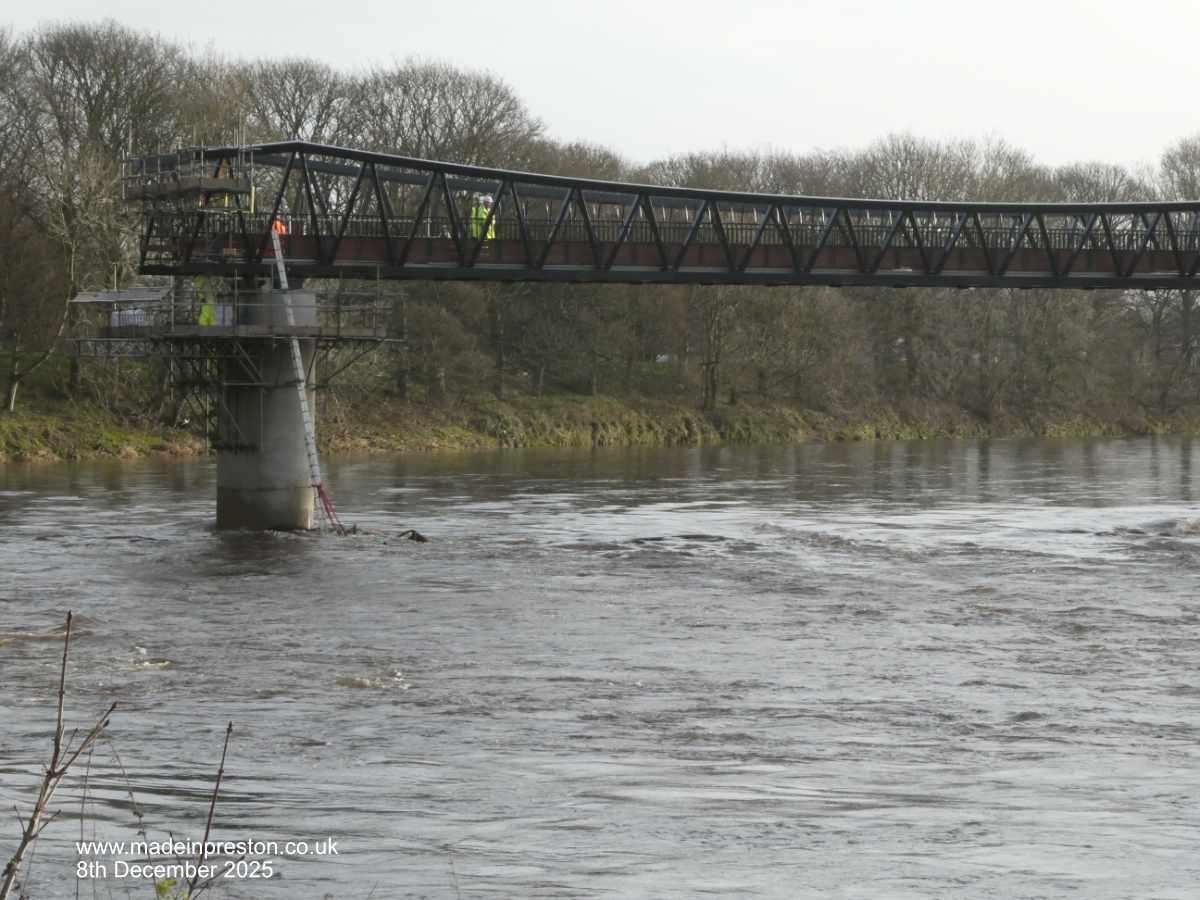
An interesting shape, a massive improvement. It continues the theme of the Avenham Pavilion, a slight oriental flavour to link it to the Avenham Park old Japanese Garden.
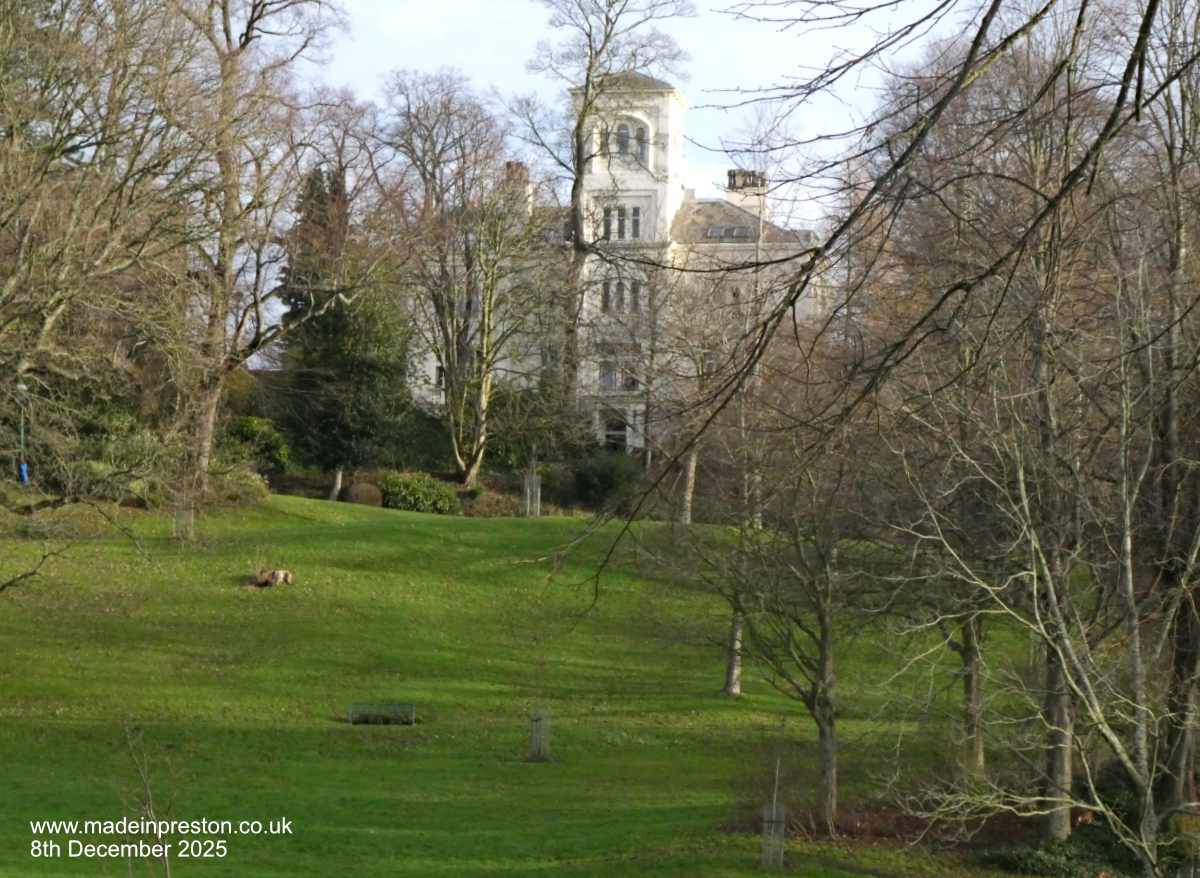
The interesting Italian style tower building that overlooks from the east of Avenham Park.
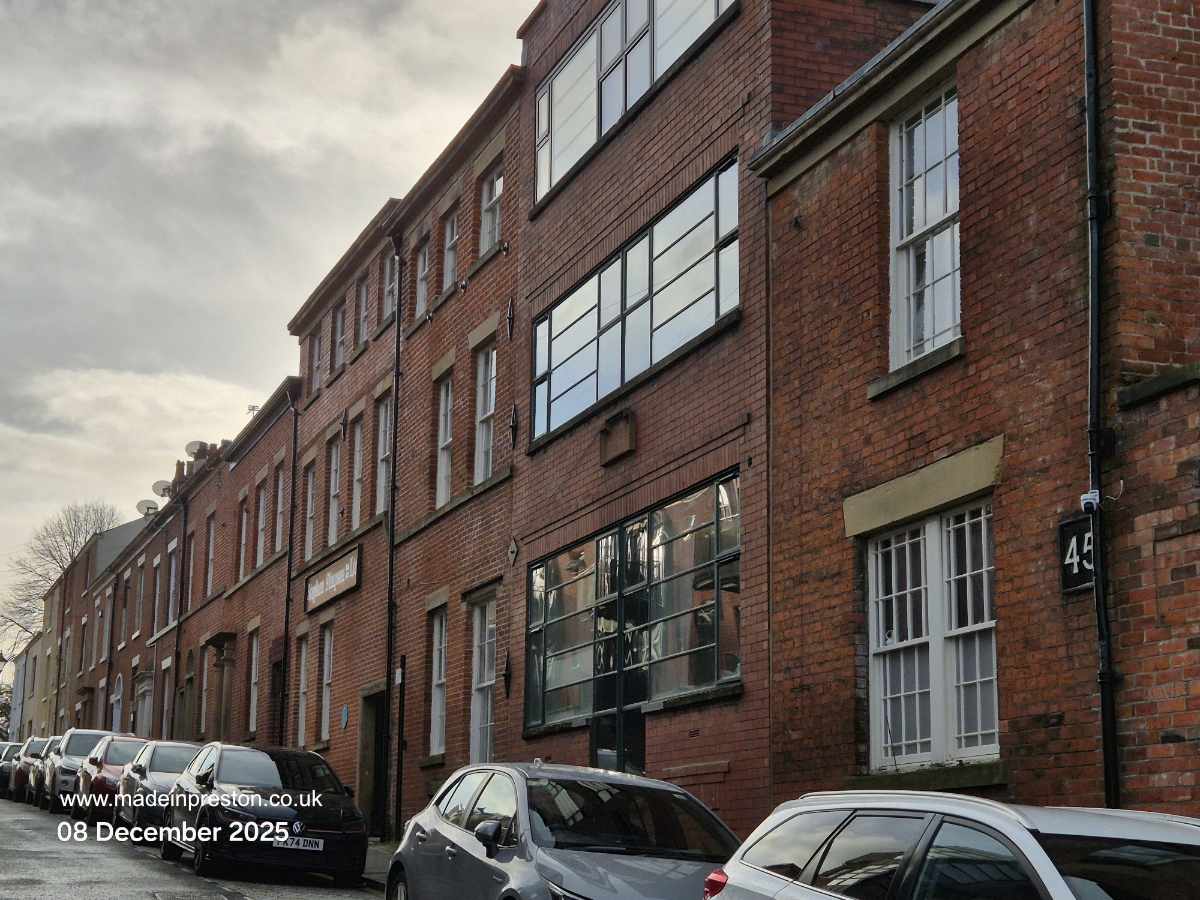
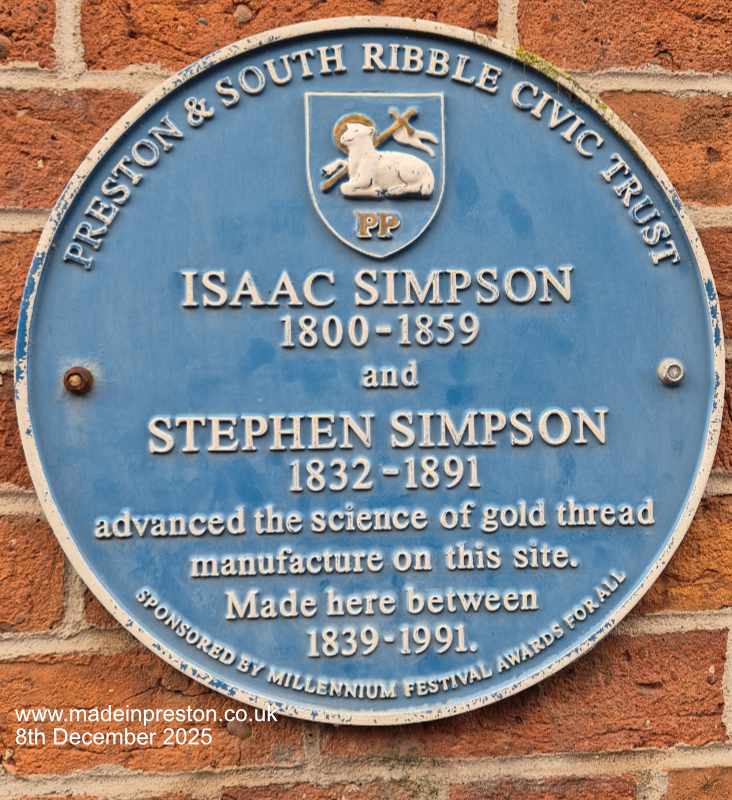
Simpson’s former gold braid works and blue plaque. We’re used to saying ‘former’ industrial site. It’s hard to compete with places paying very low wages except for truly innovative or distinct products.
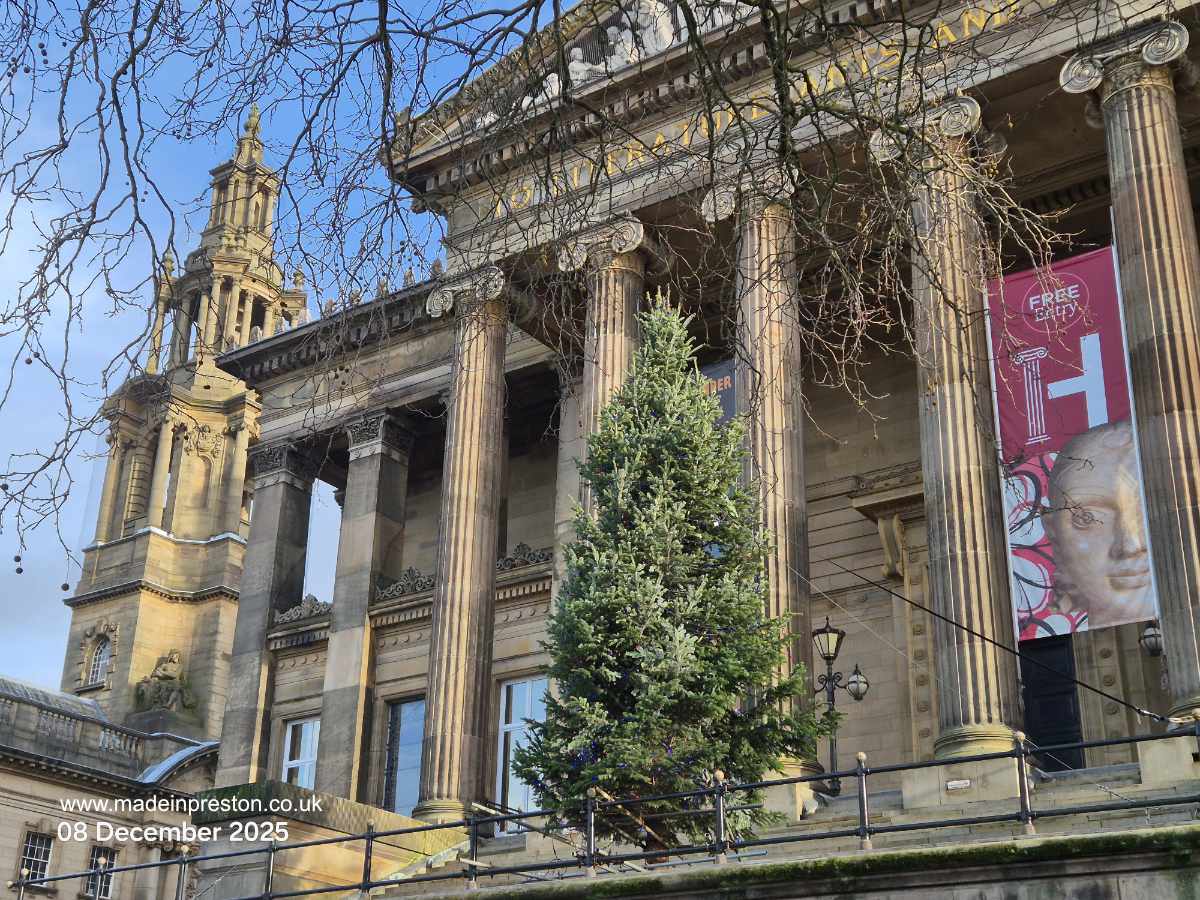
Harris Museum, the heart of Preston. Enormous queues for the free Wallace & Gromit Exhibition during post-Christmas week, before it closes. It’s been a cracker.
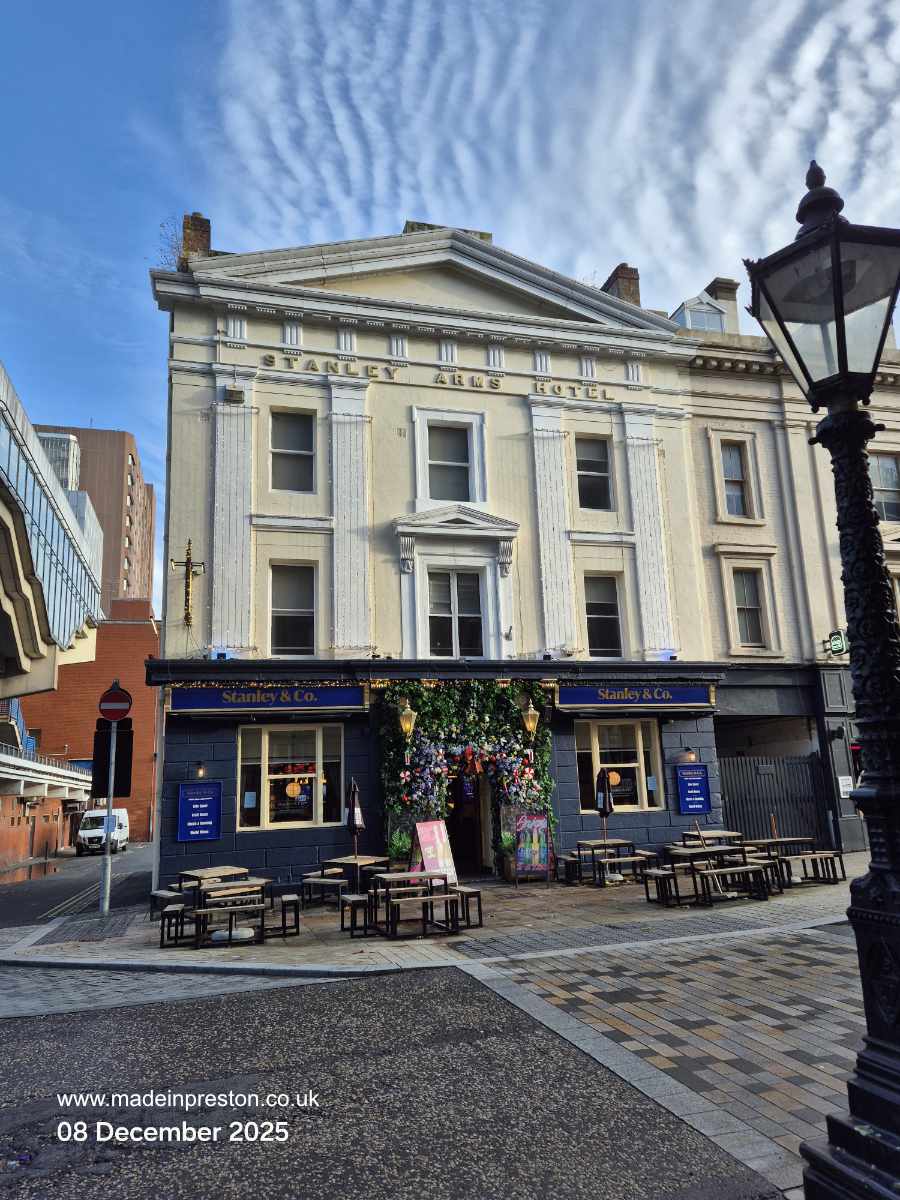
The Stanley Arms opposite the Harris Museum Lancaster Road entrance. It looks very smart after it’s makeover. Assisted by the interesting cloud formation.
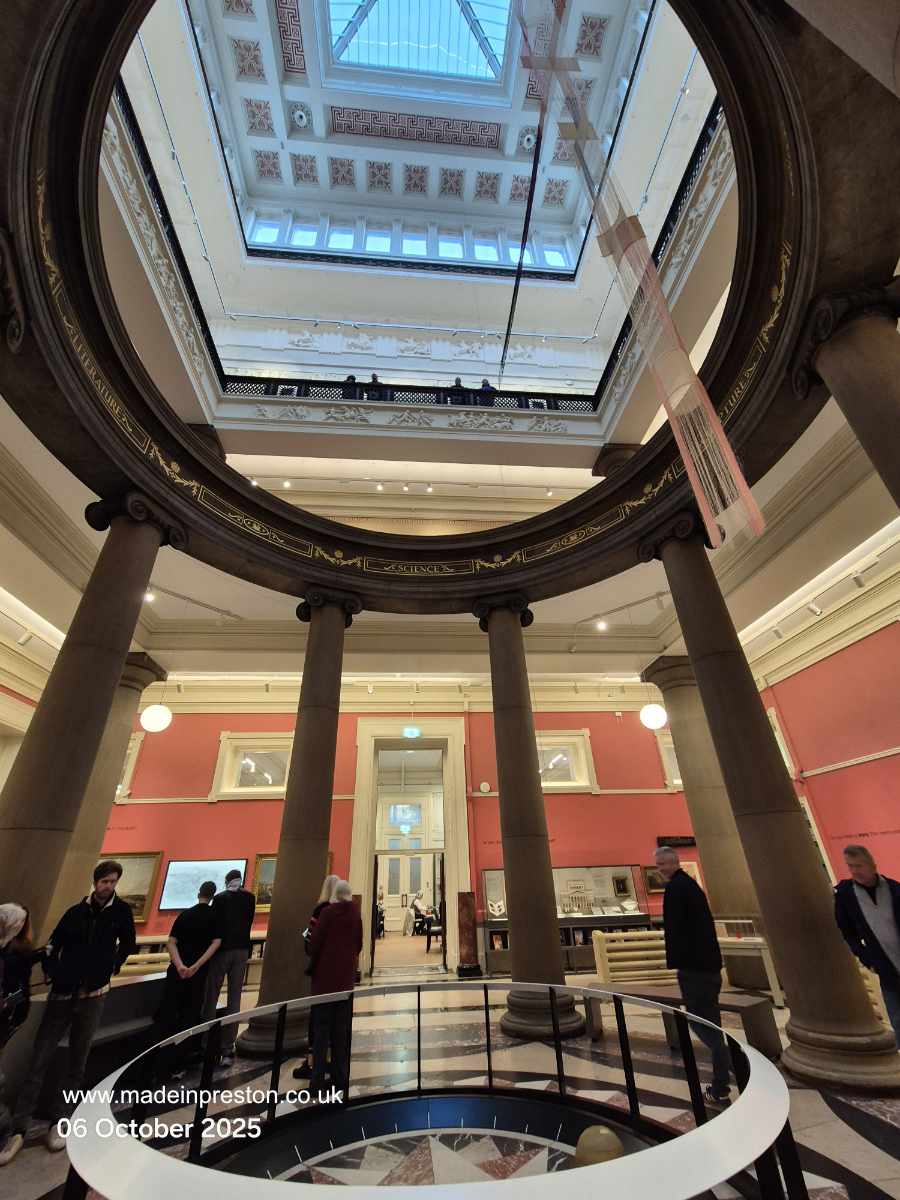
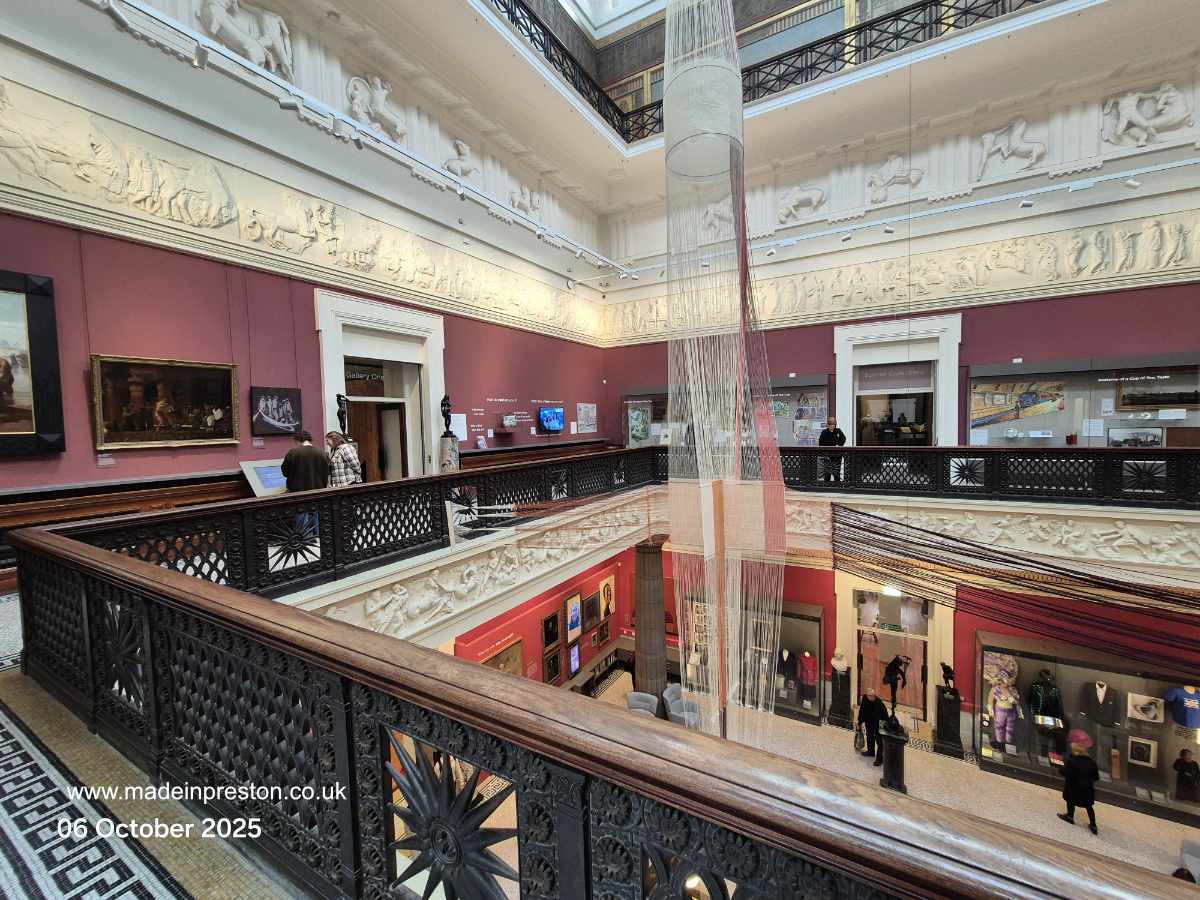
Hooray on Sunday 28th September 2025 the Harris re-opens after 4 years of transformation costing around £19m. We visited as members of the Friends of the Harris in December 2024 before the exhibits began to be returned and then after opening. Shown below on the 6th October and 10th November 2025.
6th October 2025 Visit
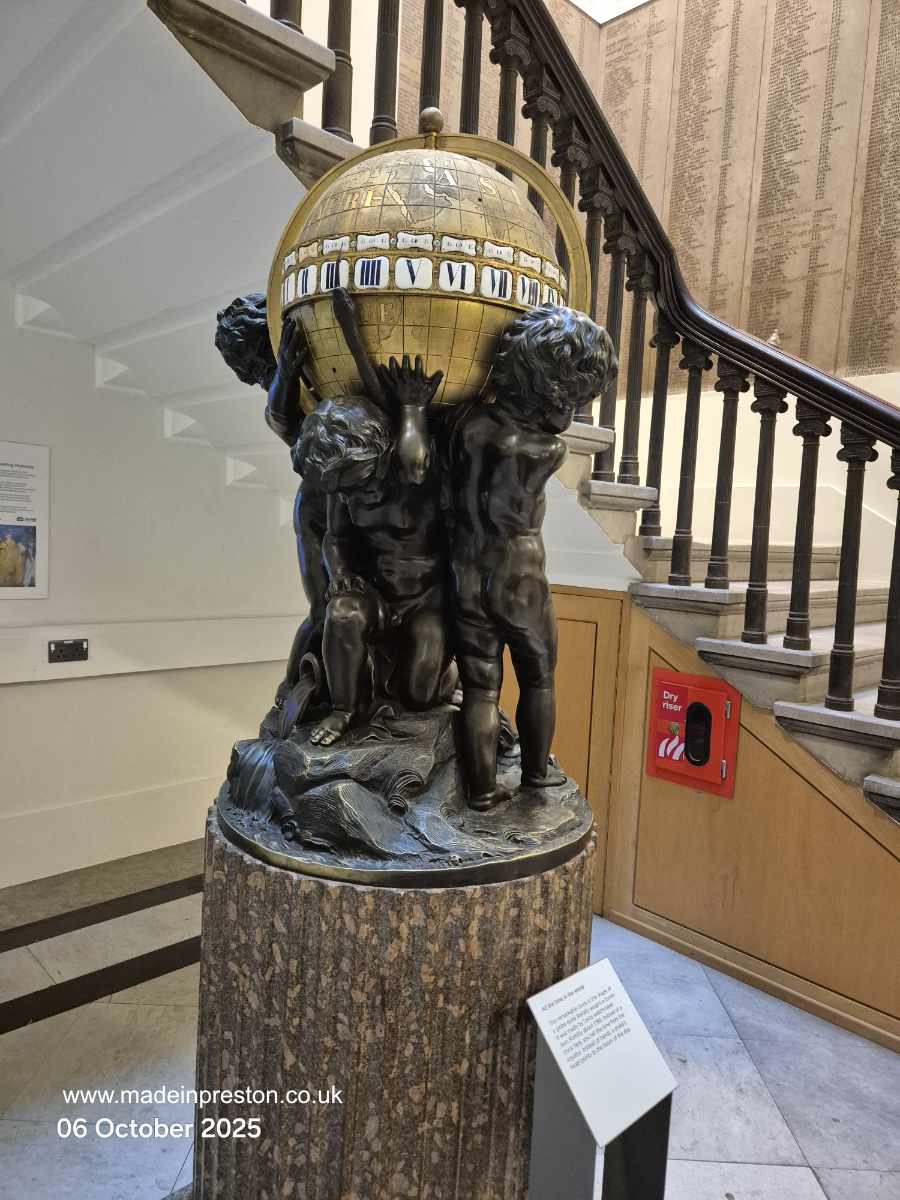
The Foucault Pendulum. A long term favourite
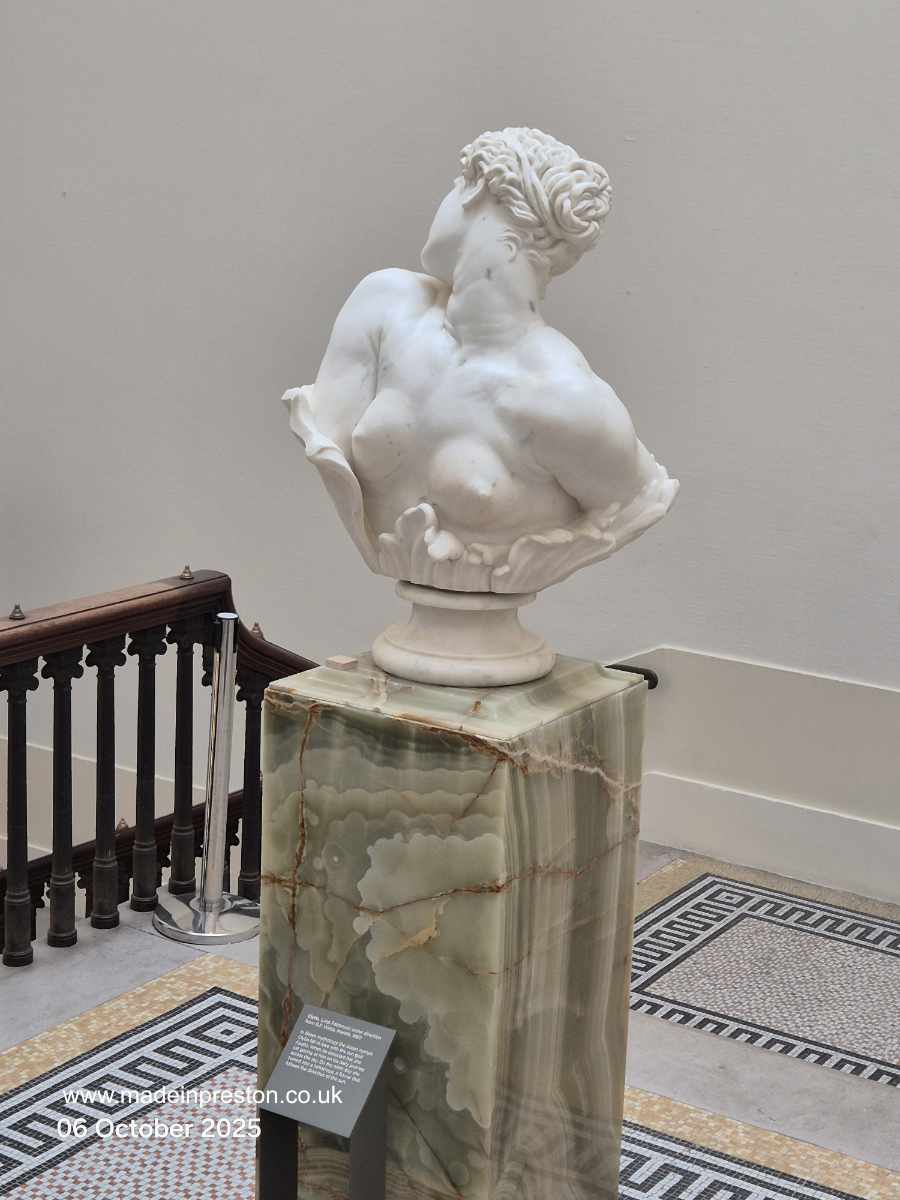
Clytie. Restored at the Lancashire Conservation facility in Preston and now back in place. Clytie was a water nymph who became a heliotrope in Greek mythology.
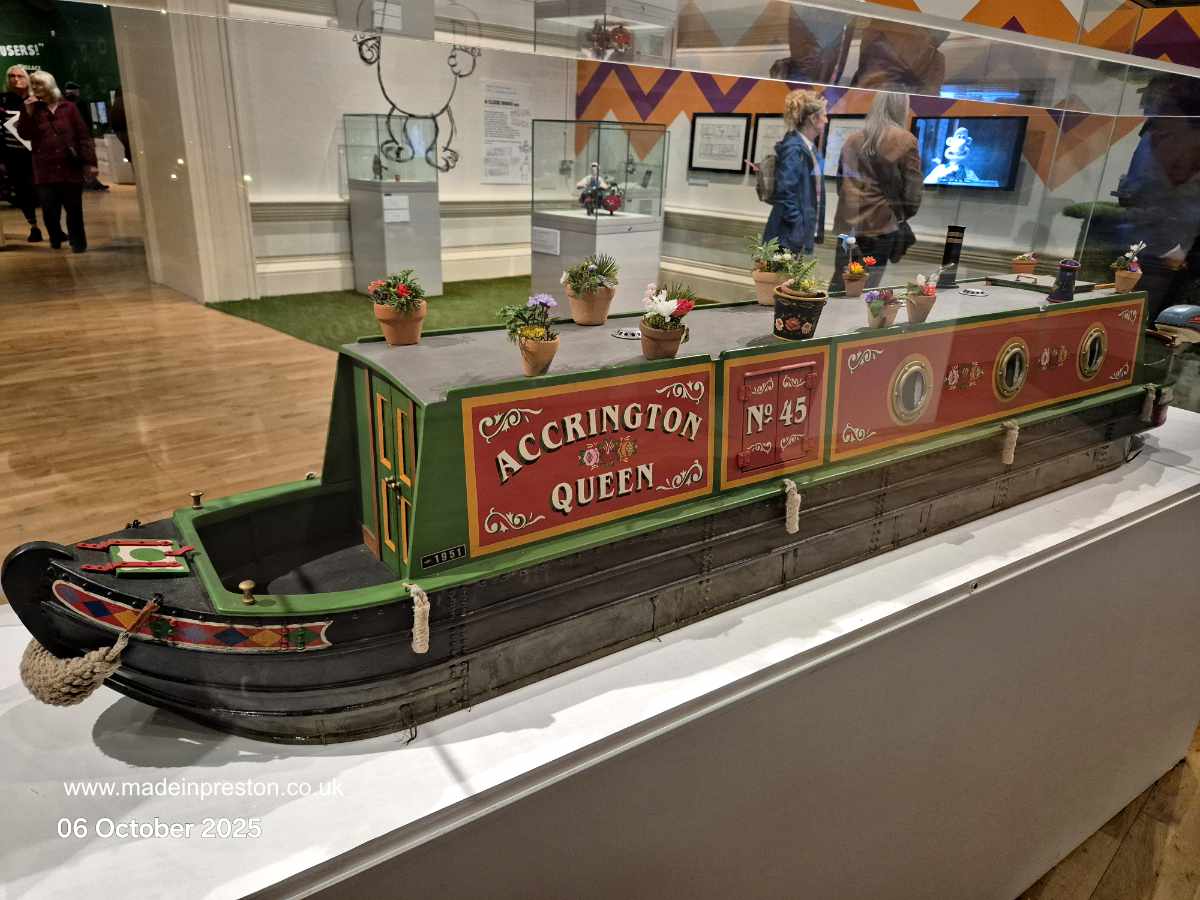
Wallace and Gromit exhibition ‘Accrington Queen’.
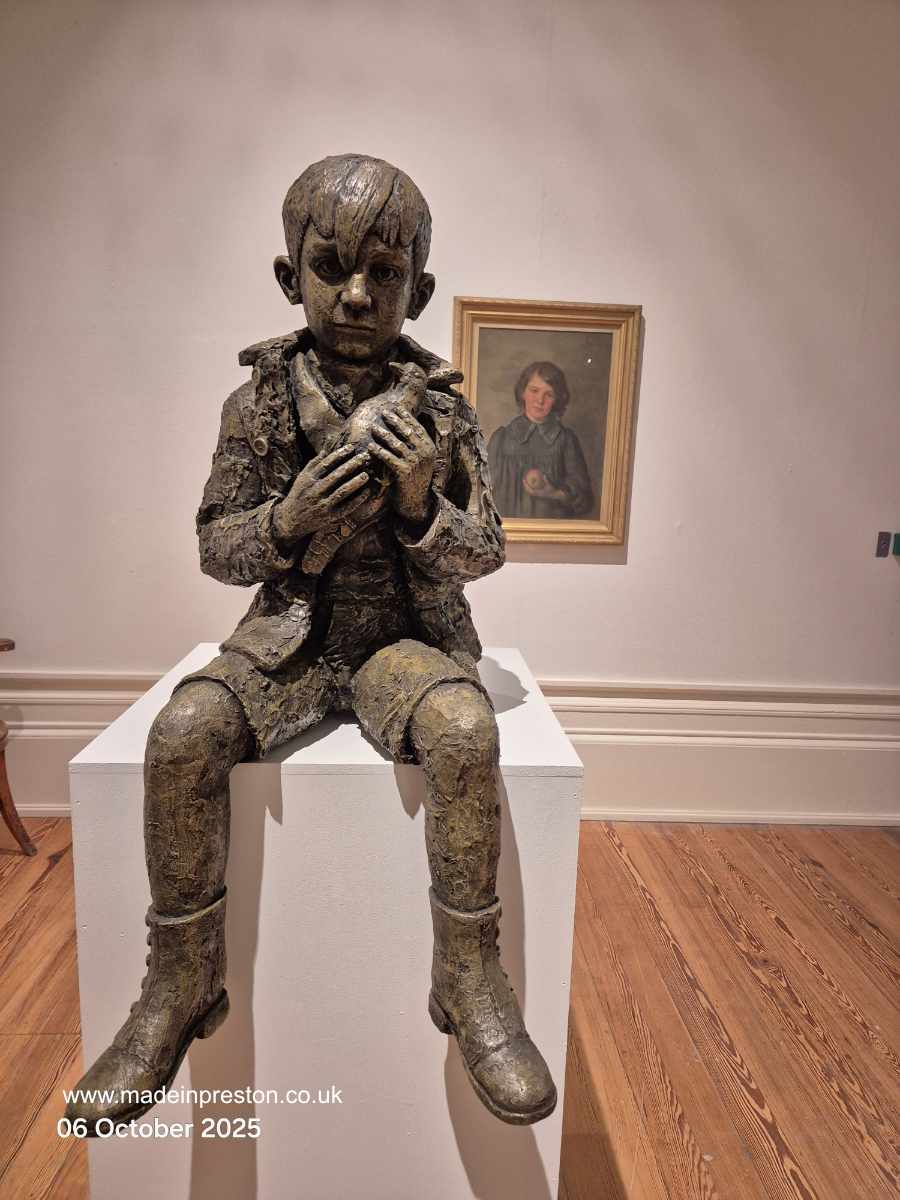
A fine bronze, one of many in The Harris.
10th November 2025 Visit
On this visit we stayed on the ground floor to focus more with just a quick visit to the Wallace and Gromit Exhibition upstairs.
Wallace and Gromit Exhibition until 4th January 2026
The Red Rose of Lancashire in the book exhibition.
The Weekend of 6th and 7th September 2025 was a combined Gala Day and a 25th Anniversary Celebration. With 5 locos in steam and the buffet on every train.
5th February 2025 a beautiful blue sky for a walk from the Preston dock up to Roebuck Street and towards the centre of Preston.
The former Preston Dock Office, now Old Docks House. Visiting inside many years ago it had wooden panelling and old high wooden desks with high seats. The Dock Board Room was behind the lower windows on the left. If my memory recalls well?
After walking along Stocks Road parallel to the Lancaster Canal then turning right onto Roebuck Street the next turn was into Parker Street. The mill on Roebuck Street is replaced by a park but here’s the old mill wall on Parker Street. It was a big mill single storey like the photo a few down.
These are quite long streets and at the other end of Parker Street is Plumbs soft furnishing in an old cotton mill called Brookhouse Mill. The mill on the left 1844 and the mill on the right 1858, ref Cotton Mills of Preston. This area has a good collection of remaining former cotton mills of various styles although the chimneys and water towers are gone. This section of road is called Old Lancaster Lane which could be quite interesting, if it was the old road to Lancaster.
The Brookhouse Pub, now derelict. Quite a decent building and where my father disappeared into with his brother every Friday night in the 1950s. I didn’t know where it was until long after as we moved when I was too young to go that far.
Shelley Road Mill still used for fabric, clothing. Roebuck Mill looked something like this.
The Lancaster Canal at it’s end now, near Acquaduct Street.
The former Savoy Cinema, now Savoy Timber off Fylde Road, in Ashton Street.
St Mark’s Church, now apartments, on St Mark’s Road. View from Abbey Street which is right from Ashton Street. Looking across the Blackpool to Preston line.
St Walburg Church with it’s landmark spire on Peddar Street. Also a nice interior.
From here walk into the centre of Preston via Marsh Lane or past UCLan and along Friargate.
Spud Bros have been putting the banter into the baked potato with novel fillings from their stall in an old Tram on the Preston Flag Market. Backed up by a successful 3 million following on TikTok and a good range of banter. Their pop up stall in Soho, London, made national news in The Times 18th April.
The new larger Preston stall has long queues and a planning application has been submitted for a larger but temporary set up on the Flag Market.
It’s the first time we’d been in the Harris Museum and needed hard hats and hi-viz jackets, but it was Friday the 13th. Our tour was arranged for members of the Friends of the Harris as a preview of the building before they start bringing in the collections. We were generously guided by Programmes & Collections Manager, James, and by Fundraising & Development Officer, Robina.
The first room visited was the Family Library although temptingly we could see the Ground Floor Rotunda which would enable sight of the main feature of the building which is the view up 100feet and the new lantern roof.
The Harris Rotunda and the new lantern ceiling window from where the awe inducing Foucault Pendulum will swing, demonstrating our planet’s rotation.
The rooms look large without furniture and collections. This will be the entrance room from Lancaster Road, note the uncovered fireplaces:
Looking up the stairs:
The First Floor Discover Preston Gallery will have a light refresh but will be largely unchanged. The Harris Office has moved down into the basement creating a new gallery space and IT Hub, and the Reading Rooms will also host events.
The first floor with a view of the Miller Arcade upper floors. The museum format will be a ‘blended’ display where related items will be displayed together rather than divided by collection.
The Balcony Area on the upper floor. The tone of the wall paint is darker on higher floors where the light is brighter.
The frieze between floors:
Looking down:
Looking up to the Egyptian Gallery:
A closer view of the lantern:
Down in the basement, the staff office and collections storage will take up some of the space:
Other areas seen were the modern toilet facilities in the area next to the Flag Market and the new location for the cafe on the ground floor. Also the new stairs at the Lancaster Road side.
The big question is; When will it re-open? You may ask but let’s say next year just in case.
It was a good tour mirroring the one we had after the building was emptied and before the work began in 2022.
Related posts on our website:
Here’s our Harris webpage which has a short piece about our last visit on the 6th May 2022. Click here
Here’s a post dated 2022 on our blog about ‘the Harris your place’. The original proposal – Click here
Here’s a post on this blog about The Friends of the Harris visit to the Lancashire Conservation Studio.Click here
It’s unfortunate that two Grade II listed empty buildings in the middle of Preston have been damaged by fires in the last month.
The first fire was in Mount Street at the old Grade II listed, St Joseph’s Orphanage on the 4th November 2024. This building was empty and having some reconstruction to the tower facing Theatre Street which doesn’t seem to be effected.
Photo of the tower taken on 23rd July 2024
Photo of St Joseph’s former orphanage, after the fire, in Mount Street taken on 21st November 2024. The road is fenced off.
The other fire was behind Grade II listed building at 131, Church Street on the south side. The fire weakened the listed building and it has since been pulled down.
Photo of the listed building just prior to demolition taken on 21st November 2024.
There are several old warehouse style buildings in that area of Preston. None of them look in good condition. They are attractive but presumably the work to make them usable costs too much.
A special visit to the Lancashire Conservation Studio in Preston with the Friends of the Harris Museum and Art Gallery. We were advised not to photograph anything that had been sent from other organisations.
After an introduction by members of the studio team we were divided into 2 groups and taken to meet the conservators at work. It’s an interesting building, being an old church.
The first stop was the Bond Mini which was built in Preston and developed from 1949 to 1966. A three wheel car benefitting from lower tax as it had no reverse and was 3 wheels. This is an early model and is basically a motorcycle engine on a simple chassis with aluminium body. Tiny wheels and front wheel drive. Quite stylish.
The first piece of conservation is the bust of Clytie being cleaned before returning to the Harris at its re-opening. The cleaned section on upper cheek is distinct.
Another piece of work from the Harris are the Ceylon Tea containers depicting tea picking scenes.
There is an old sewing machine of a type not widely known. It looks like it might be a working tool of the studio.
We were also shown the painting restoration area and how a bridge had been made for the conservators to get above large paintings.
En-route to the Studio we walked along Church Street. It was a wet day. Many of the buildings are in dis-repair yet they have more character than many parts of central Preston. The Old Dog Inn being one:
Next to the Old Dog Inn is an old warehouse.
A bit further along we come to The Bluebell Inn and another interesting building. Behind is Cotton Court an old part of the area where the original Yellow Factory stood.
The Lamb is another pub with an interesting Georgian looking face.
A good day to walk around Moor Park, Preston. At first sight it doesn’t look significant but this park was on Preston Moor where a battle raged in the Civil War 1648 between the Roundheads and the Royalists. The park is also home to the former grammar school’s, Preston Boys Grammar, and Preston Park School for Girls. Both have interesting buildings although no longer grammar schools.
Preston’s first Observatory is on the park and it still operates although there is another new one near Longridge in a darker place operated by UCLAN, University of Central Lancashire.
Next door is Deepdale, home of Preston North End since 1878. The park is a large field surrounded by trees which is used for sport. The BBC Radio 2 Weekend in the Park was held here 6th to 8th September 2024. It was very popular although the whole country was caught in a storm.
Sir Tom Finney. Splash! A statue of the famous photograph taken at Stamford Bridge at Deepdale the home of Preston North End. Just behind Tom is the large mural of Dick Kerr’s Ladies Football Team. There is a photo on this blog.
The view of Deepdale from across Deepdale Road, in Moor Park.
Moor Park with the grass churned by the BBC Radio 2 in the Park.
The pond in Moor Park.
Beyond the pond is Blackpool Road with its avenue of trees. Prematurely taking a strong autumn tint very attractive in the sun.
Moor Park Observatory usually open on Heritage Open Days, September every year.
The fascinating Bricklayers display as paraded in the 1952 Preston Guild. Preston Guilds have been held for hundreds of years and continue every 20 years. Next one 2032.
Moor Park High School. Formerly Preston Boys Grammar.
Moor Park Primary School. Formerly Preston Park School Girls Grammar.
Another good walk in Preston: Tram Bridge – Harris Institute – Edith Rigby House – St Wilfrids – Harris Museum – Upper Friargate plus bonus places
The word is on the street is the Old Tram Bridge is gone. Time to check it out.
The River Ribble in Preston after demolition of the Old Tram Road Bridge. 4th September 2024
Heading into Avenham Park, up onto the former East Lancs Railway Bridge, now a footpath. Look left, a space where the Tram Bridge was. There’s a digger creating islands for the work on the new bridge. That’s something, a space, after 200 years.
Looking over the other side we see the West Coast Main Line on the North Union Bridge over the River Ribble.
Turning back we see the former Park Hotel ever threatening to be restored. Going straight along the path takes you to a barrier so we turn right and head back down into Avenham Park.
But what happens if we don’t turn back. Skip the next paragraph if you don’t want to know.
It’s good to walk on former railway lines. The track goes towards Bamber Bridge but doesn’t reach there as a footpath. On the way you can turn left to the Capital Centre, or right to Vernon’s Cricket Ground as in Freddie Flintoffs: Fields of Dreams Series 1. You can turn onto the Tram Road and walk back in a triangular track or go further on to Lostock Hall. The rail track passes what was a large gasworks but is now a housing estate before the line comes to Todd Lane. I doubt you can walk past there. It’s years since I walked along there.
Another option is to go down the other side of the bridge to Penwortham. Or go the other way to where the Tram Road bridge works are but can you get past? If you can get past it goes to the Capital Centre or Winery Lane, Walton Le Dale.
Back in the park we walk along the river bank enjoying views of bridges and trees. It’s nice in there.
This riverside avenue of trees looks good in all seasons.
The totem pole which contains a chain to denote the old trams and the steam driven chain that hauled them up the steep bank climbing around 100ft above the bridge. These horse drawn trams(trailers) could carry 2 tons of coal.
The message ‘Tram Bridge. Reviving history. Reconnecting Preston.
The tram bridge opens walks over the river and along the Tram Road. These trams being horse pulled carts on rails between the Leeds Liverpool Canal and the Lancaster Canal. An aqueduct and locks being too expensive. It was started in the 1790s and operated for about 30yrs dragging coal dug in Wigan sent by barge before being dragged by ‘tram’ to Preston for loading onto a barge for Lancaster and Kendal. This was before the railway came to take over the job. Things don’t stop evolving.
The Old Tram Road was a badly maintained dirt track in the 1960s, capable of taking a car if essential. Trains were still running from Blackburn(and further east) and Liverpool over the East Lancs Bridge and track. That route closed to passengers from Bamber Bridge to Preston in 1968 and Todd Lane Junction station closed.
The gasworks would be fired by coal and produced coke and gas. By the time the line closed it was fired by Fuel oil which was shipped by rail for many years until North Sea gas came along and closed the site. Every gas cooker in Britain had to be converted to burn North Sea gas instead of Town Gas. The gasworks lasted from around 1924 to 1970. I used to be able to see the gasometers going up and down across the fields from our back window. The giant gasometers are gone all over Britain.
Here’s a better shot of the former bridge stands in the river and at the far side the first of the workers islands. The new bridge is covered in a previous post on this blog.
Moving on, instead of going up the steep former tram road go a bit further on and see the cannons from Sebastopol on either side of the steps.
Then up to the promenade and the tower building, now flats, maybe apartments.
Halfway along the promenade some interesting looking houses down a side street to the right. Enjoy the architecture.
The Harris Institute. A fine building pending another proposal for use. At this point Avenham Lane changes to Ribblesdale Place a formerly affluent area, now mainly offices.
Ribblesdale Place. A road with some fine houses overlooking the park at the back.
The home of the Reverend Robert Harris and his son Edmund in Ribblesdale Place, Preston.
Ribblesdale Place. The house of the Rev Harris whose son was benefactor the Harris Museum.
The Blue Plaque for the Rev Robert Harris and his son Edmund on the building they lived in at the gates of Avenham Park. Edmund being the benefactor of the Harris buildings in Preston.
On to Winckley Square, Chapel Street. The house of Edith Rigby proposed for a museum to commemorate the Women’s Movement. See the Blue Plaque below.
Blue Plaque in Preston. Edith Rigby. Suffragette. Secretary of Preston Branch Women’s Social and Political Union.
This building looks good in the September sun. The next building is the site of the Preston Catholic College which was the Catholic Grammar School in the not too distant past.
St Wilfrid’s Church. Roman Catholic across the road from the former Catholic College. It’s interior is finer than its exterior. Going into churches in Preston wasn’t something I did but lately there’s been two firsts, both exceeding expectations.
On Winckley Square north side is the former house of Thomas Miller, mill owner and one of the benefactors of Miller Park. See the Blue Plaque below.
On the south side just beyond Winckley Square is another house of a Women’s Movement lady, Beatrice Todd. Blue Plaque below.
Read more about Winckley Square on our website. Click here
In Glovers Court leading to Fishergate is the Wellington pub. It looks better now than it did. Formerly it was very popular with teenagers in the 1960’s as the Beachcomber club was at the Fishergate end.
Booth’s clock bridge on Glovers Court. On the left upstairs used to be a high class fashion shop whose name escapes me. 1960/70’s.
A view along Fishergate the main shopping street in Preston. The banner is for BBC Radio 2 in theP ark. Held in Preston from Friday to Sunday 6th to 8th Septembe 2024. A successful event with big audiences on Moor Park, to the north, and good weather until Sunday when it rained, as it did all over the UK.
The Harris Museum awaiting re-opening in early 2025. The announcement this week that a major supplier of the update has gone into administration puts a chunk of funding at risk as well as the opening date. Although we can only wait to learn what the administrator and council does.
The best built view in Preston.
Read more about the Harris Museum, Art Gallery and Library on our website. Click here
Another project on hold is the old post office conversion. Plans for a hotel are on hold.
Continuing into Friargate just on the left is the former Boars Head pub looking tired. This was a popular pub.
The Black Horse pub has an interesting interior. It had an old chap with a moustache and a white jacket who waited on in the late 60s.
The Methodist Church on Lune Street. Venue for Preston Historical Society meetings.
The Old Vic across from the Railway Station. Next door is Rise a nice coffee place and sister to the one in the Miller Arcade which also offers food.
Preston Railway Station from Butler Street. It’s good that Preston kept the prestige of having a real fully covered railway station when all the other towns in Lancashire had their’s knocked down and replaced with large bus type shelters. Perhaps that helped give Preston city status. That and the astounding bus station.
That was a good walk, very enjoyable and thought and memory provoking. Preston has many layers of history and still moves on powered largely by UCLan and payments from students and their demands for youthful life. Keep that youthful life and keep walking.
Read more about the Railways around Preston and the Tram Road on our website. Click here.
Two more murals in Preston. Both viewable for the delight of train travellers. Although one isn’t new.
This first one appears new and can be seen from a train inbound from Blackpool. Four o’clock low when you see the docks. Blanche Street, behind the Wheatsheaf pub, Water Lane.
This is almost on a par with the mural ‘Mother’ for skill and meaning and painted by the same artist, Shawn Sharpe.
As a first thought binding Preston’s cotton mill heritage to the workers at the mill and the hand that picked the cotton.
As another thought, a feminist feel perhaps. The dungaree wearing lady has a 1940s land girl style, representing the part women played in the mills and fields since industrialisation began. The mill is Tulketh Mill with it’s iconic chimney and tower, now a call centre. The lady could be Sally, pride of our Alley, hard working, tired and strong. PP, or Proud Preston, with a pink background, traditionally female pink?
The great thing about this are the multiple themes and interpretations. You could write a book.
The link to cotton – a mural in Blanche Street Preston
The second mural has been there quite a while and faces the Railway Station Butler Street entrance on the side of the Station pub. It’s well painted with an urban feel. This one has been done before the recent trend for meaningful and locally themed murals.
On close inspection it’s very well painted with a lot of detail such as the marking on the cheeks and in the blue rim. Melting on the left and underneath. To try to interpret it brings us to fanciful words about the melting of society and global warming when perhaps it’s just an urban feeling. A night out.
This is the ramblings of an aged gent, open to thoughts.
A mural in Butler Street in Preston, facing the railway station.
A short visit to the Ribble Steam Railway on Saturday 24th March 2024. Furness Railway No. 20 being the star of the show. Refurbishment of this was completed at the Furness Railway in their workshop at Preston. Before that work was done at BAE Systems at Barrow.
Photos of the train at the Ribble Steam Railway depot and crossing the swing bridge at the Preston Dock. Also photos inside the RSR Museum.
The 23rd April 2024, a nice day for a walk round Preston. This route goes along East Cliff, to Miller and Avenham Parks then along the River Ribble to the Tram Road Bridge. Then back up above the flood plain into Frenchwood before heading up towards the Preston Minster to Fishergate.
Heading down Fishergate from the station we come to East Cliff. An interesting road that has a very steep fall into the river valley behind the houses on the right hand side. It also contains some very large houses, probably once owned by wealthy people but now mainly businesses or divided into flats.
First we see the headquarters of the English Football League:
Further along on the left we have a large fairly elegant 3 storey terrace:
On the right one of the large buildingsThe left side: On the right:
On the right behind the houses it overlooks the sports ground. Once English Electric Sports Ground
A walk under the West Coast Main Line in Miller Park
Along the River Ribble.
Miller Park, Preston Avenham Park, riverside walk
The Tram Road Bridge. This is now closed being structurally unsafe. A new bridge has been approved and work is due to start in May 2024. I might be wrong but the new design looks more obtrusive to the view. But it only has 2 supports in the river which allows fallen trees to pass in floods without damage to the more delicate structure.
The Frenchwood bus depot of Stagecoach. Which older Prestonians would recall was Rbble Buses HQ and depot. The HQ being a more interesting Art Deco style building just off this walk.
Cardinal Newman College. The Catholic College of Preston.
The high rises in Avenham look a lot smarter now.
Arkwright House in Preston. An interesting house where inventor Arkwright started his spinning frame that created a lot of wealth. Although he had to flee to Cromford due to worker protests in Lancashire.
Preston Minster south side.
The favourite mural. One of many in Preston, mainly very good.
The Miller Arcade and behind it the Harris Museum, Art Gallery and Library which is now under renovation until 2025.
Miller Arcade. A nice shopping centre although mainly eateries now.
A January walk from Ringway to Adelphi along Friargate to look at the almost complete update of the road. Past Roper Hall where I sat some Open University exams 50yrs ago.
Then right on Walker Street. Right again on Patten Street to see how what was Trinity School, which was used as a Building for the Harris College when I was there but is now gone and replaced by Student rooms.
Across the Car Park towards the Playhouse Theatre and back to the Harris Museum, Flag Market, and Waterstones.
The view of Friargate from Ringway. The update not quite complete but looking good.
Off Friargate are a number of old alleyways and sett cobbled streets. Walker’s Court sounds interesting,there is a Walker Street further down. Green door what’s that secret you’re keeping?
A car park and a shrine, to mark the site of the Church of St Mary, sits up this passageway.
The Humane Building, Friargate. Marking the Humane Assurance Company. This looks a bit flash. Student lodgings off Friargate.
The view down Friargate towards the blue Adelphi pub and UClan.
The latest addition to UCLan.
The latest addition to UCLan and the Adelphi pub.
The Playhouse Theatre, Preston, just back from Friargate and Ringway.The Harris Museum, Art Gallery and Library across the Flag Market.The Preston book section in Waterstones, Fishergate, PrestonThe view from the Blackpool train over Preston Docklands. A new Porsche dealership in the foreground. It’s flat out-west.
On Saturday 25th March 2023 the Mayor of Preston, Councillor Neil Darby visited the Ribble Steam Railway on Preston Docks. Furness Railway Trust Loco No 20 was operating. A triumphant piece of work by the Trust to restore a fine looking locomotive and the oldest working standard gauge loco in Britain, 1863.
The Mayor of Preston, Neil Darby and the Mayor’s Consort Dan Leung, on Furness Trust loco 20. The oldest working standard gauge loco in Britain. At the Ribble Steam Railway on 25th March 2023.
Team Members relax before the next trip:
The Mayor Departs, as they say in the Red Arrows, ‘smoke on’.The Mayor of Preston, Neil Darby departs on board Furness Trust loco 20. The oldest working standard gauge loco in Britain. At the Ribble Steam Railway on 25th March 2023.
Young loco ‘Linda’ sidles up to double head with Furness Trust 20.
The Mayor and Consort return and generously pose for a photo.
Thirsty work hauling carriages both locos line up for water.
It’s goodbye to Furness Loco 20 as it moves to Didcot for a spell shortly.
A photo of the The Old Bull on Church Street. It was once Preston’s top inn and called the Bull & Royal. There is a well known painting in the Harris Museum & Art Gallery titled ‘The Preston By-Election of 1862’ which shows a large crowd standing outside the inn with Sir Thomas Hesketh standing on the balcony having won the seat. Well worth having a look when the Harris re-opens.
This part of Church Street had 2 cinemas. The Gaumont and The Ritz. They gradually changed, declined and rotted.
Crystal House, the site of the previous Town Hall, destroyed by fire in 1947. On March 17th, which is almost exactly 76 years ago.
The Obelisk on Preston Flag Market. Positioned in 1782 but removed in 1853 and placed in the grounds of a house in the village of Woodplumpton to the north of Preston. In 1979 Queen Elizabeth II unveiled it after it was returned on May 10th, 800yrs after Preston received a Royal Charter.
Market Street as viewed from the Flag Market. Leading to the 2 impressive Victorian Covered Markets. On the corner of Market Street is the former Barclays Bank which was Martin’s Bank.
The former Public Hall or Corn Exchange on Lune Street.
Lune Street.
Re-cladding of The Premier Inn, all around this nicely present house round the corner from the former Public Hall.
Another walk in Preston. It was a lovely day and I’d bought a new camera at Wilkinson’s Cameras in St George’s Mall, Preston. A pocket camera with a small sensor but a big optical zoom.
Here we are under a blue sky on the main shopping street, Fishergate, looking at Bistro Pierre in the old Baptist Church.
Fishergate from near the Railway Station.
The Harris front with its ornate apex.
Wide angle view of the Town Hall, Cenotaph, Harris building, Flag Market
The Booths bridge, 0nce the Main Shop of Booths Supermarket. Complete with waiters/waitresses in old fashioned clothes.
Zooming in on the Town Hall.
The Old Post Office behind the Cenotaph. The planned hotel isn’t yet taking shape.
Zooming in on the Miller Arcade.
Fishergate from the East end.
Miller Arcade on a sunny day. There used to be domes on the corners.
The former TSB now a Wetherspoons, The Twelve Tellers.
St John’s Minster or the Parish Church of Preston
Cardinal Newman College from St John’s.
Arkwright House Preston. Where the inventor lived. At the back of St John’s.